

Here you can calculate the required performance values in accordance with UNECE regulation R55, in order to choose the correct coupling equipment.

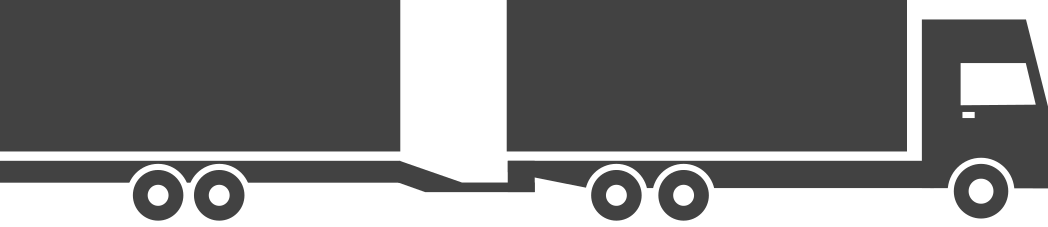
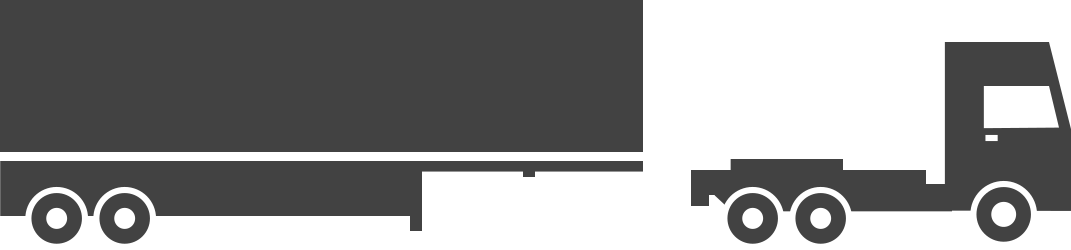





Here you can evaluate different alternatives when choosing coupling equipment or assessing your existing equipment.
Truck + trailer with hinged drawbar
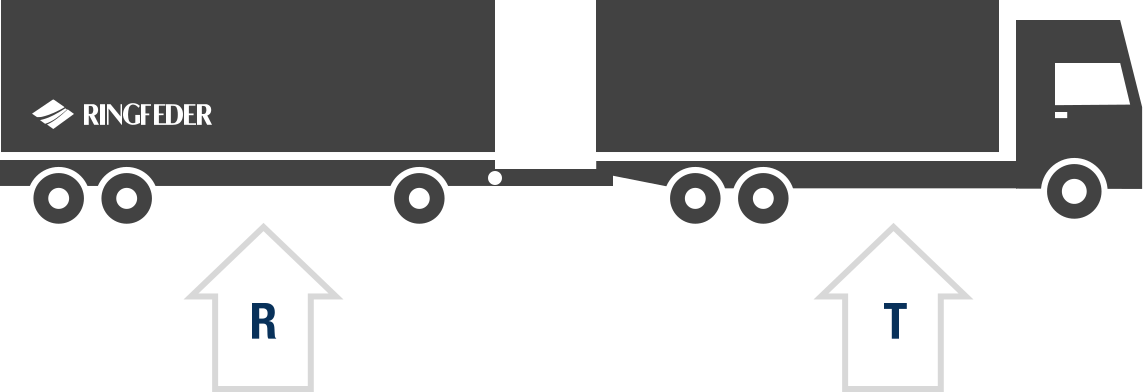



The D value is a reference value for the horizontal force between truck and trailer.
The coupling equipment you choose must have at least as high a D value as the calculated vehicle combination.
In order to evaluate your combination, you need to enter both the vehicle values and the certified performance values for each component of the coupling equipment.
You can find the certified performance values for the components of the coupling equipment either on the type plate affixed to the component or in the documentation for the component.
Truck + centre axle trailer with rigid drawbar
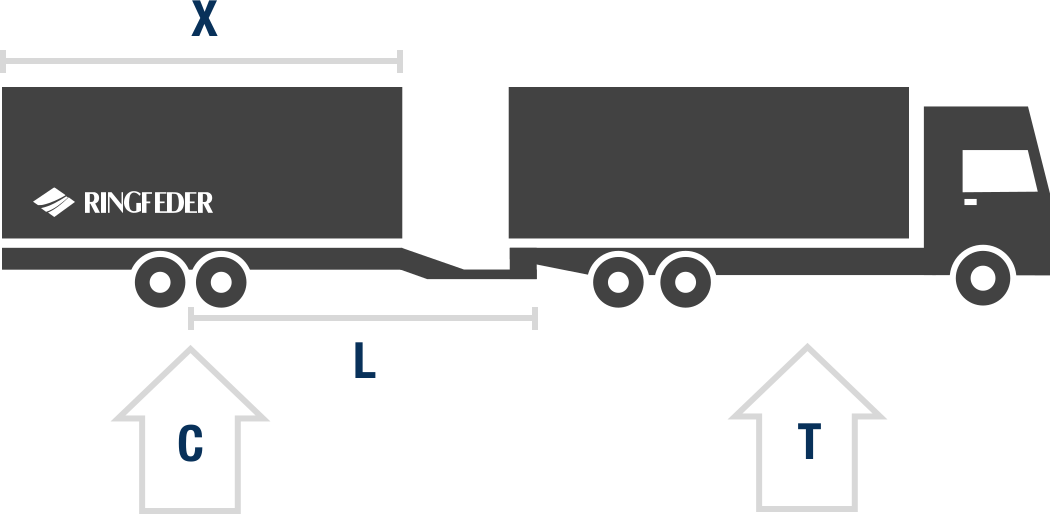
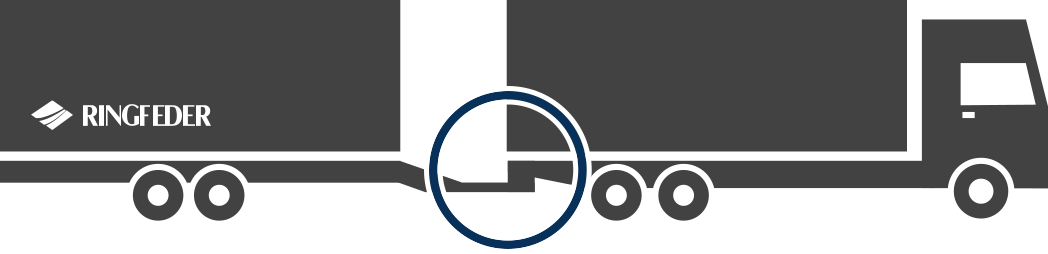
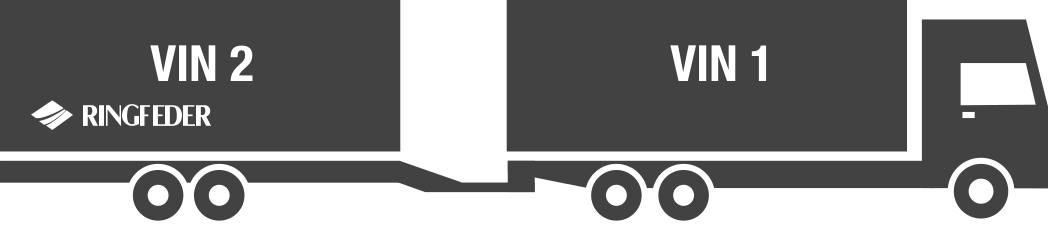
The Dc value is a reference value for the horizontal force between truck and trailer with a rigid drawbar. Here you also need to take into account the vertical forces. The V value is a reference value for the vertical force. This value differs between vehicles with air suspension and those with other types of suspension.
The coupling equipment you choose must have at least as high Dc and V values as the calculated vehicle combination.
In order to evaluate your combination, you need to enter both the vehicle values and the certified performance values for each component of the coupling equipment.
You can find the certified performance values for the components of the coupling equipment either on the type plate affixed to the component or in the documentation for the component.
The calculation is based on a S-Value of 1000 kg.
Tractor unit + semitrailer
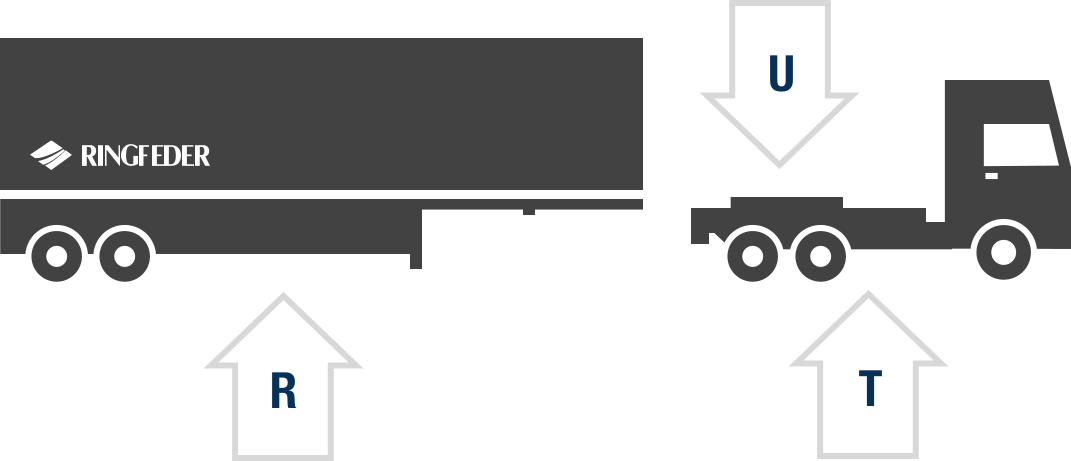
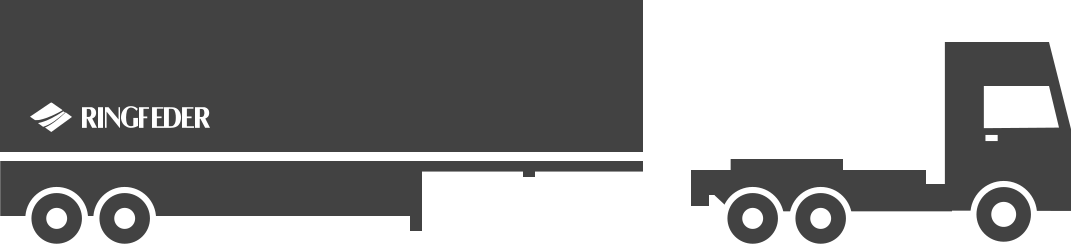
The D value is a reference value for the horizontal force between tractor unit and semitrailer.
For this combination, you must consider the maximum kingpin pressure, which may be limited by the total mass of the tractor unit, the max. kingpin pressure on the semitrailer and the max. kingpin pressure on the fixed or adjustable fifth wheel.
The coupling equipment you choose must have at least as high D values as the calculated vehicle combination.
Truck + dolly + semitrailer
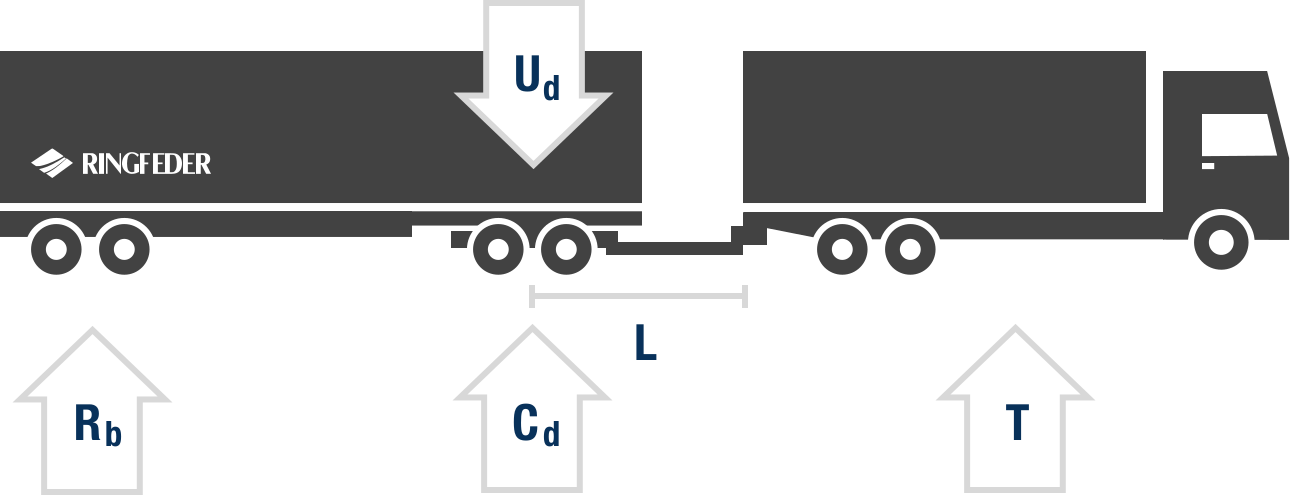
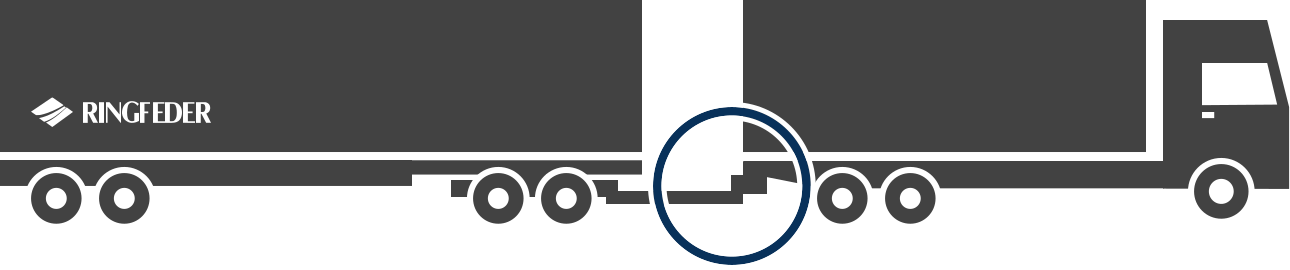

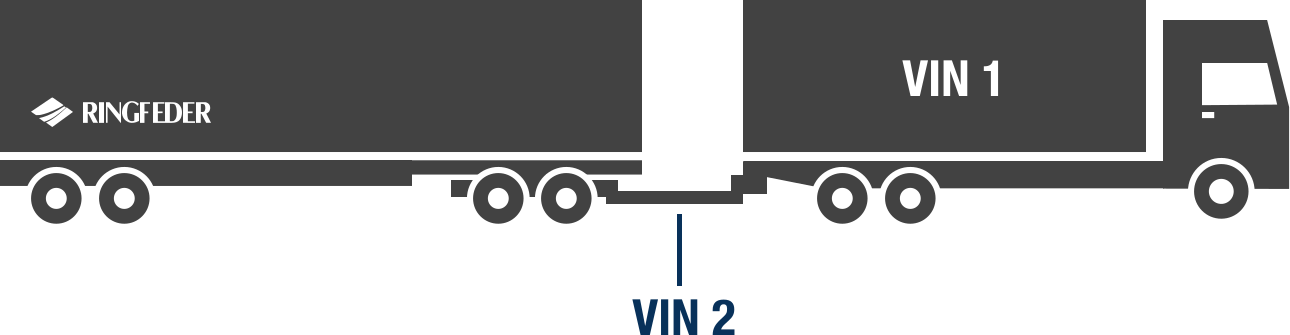
The D value is a reference value for the horizontal force between truck and trailer.
D is the reference value for the fifth wheel coupling point.
The Dc value is a reference value for the horizontal force between truck and dolly with a rigid drawbar. Here you also need to take into account the vertical forces. The V value is a reference value for the vertical force.
For a dolly with rigid drawbar, the Dc and V values for the chosen coupling equipment must exceed the calculated values. For a dolly with hinged drawbar, the D value for the coupling equipment must exceed the calculated Dc value for the dolly.
In order to evaluate your combination, you need to enter both the vehicle values and the certified performance values for each component of the coupling equipment.
You can find the certified performance values for the components of the coupling equipment either on the type plate affixed to the component or in the documentation for the component.
The calculation is based on a S-Value of 1000 kg.
Tractor unit + semitrailer + centre axle trailer
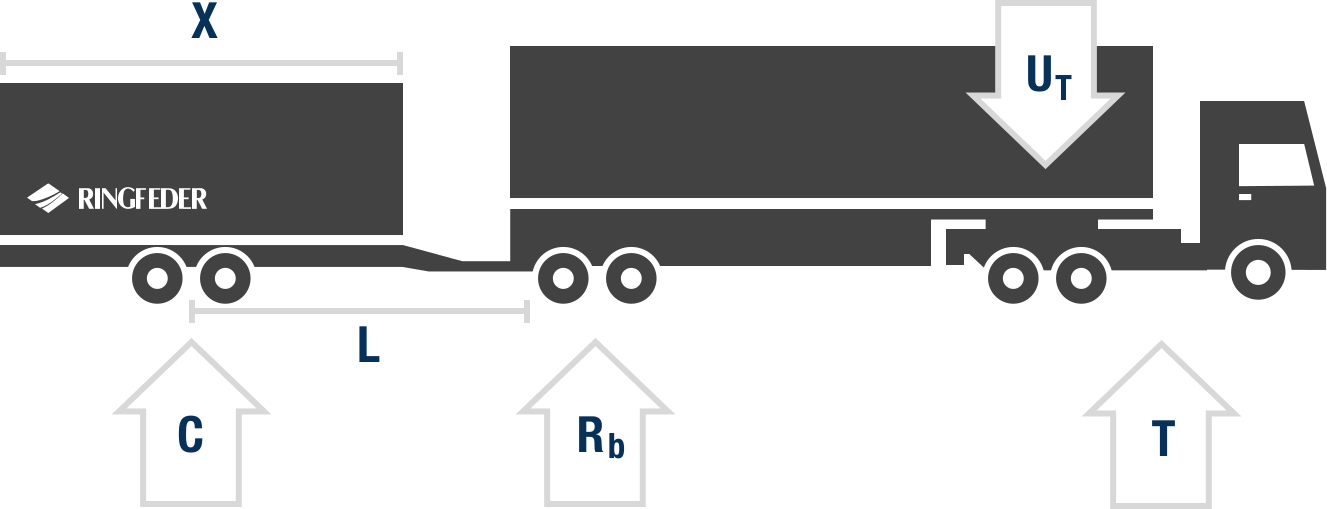
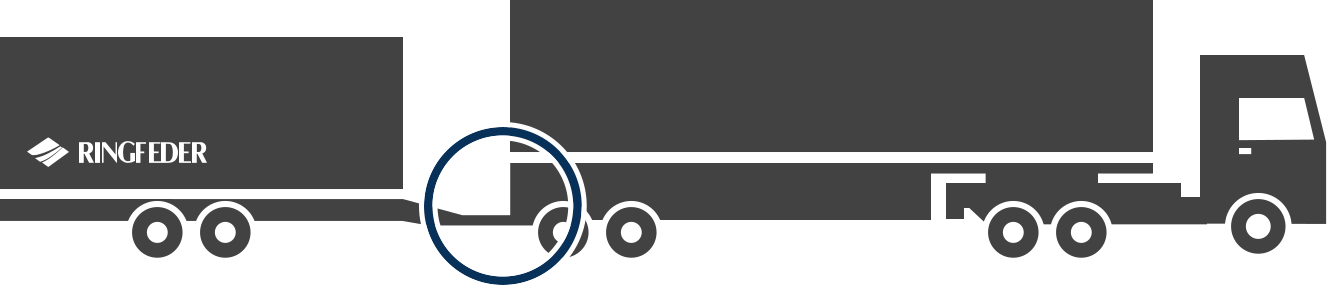


The Dc value is a reference value for the horizontal force between truck and trailer with a rigid drawbar. Here you also need to take into account the vertical forces. The V value is a reference value for the vertical force. This value differs between vehicles with air suspension and those with other types of suspension.
The coupling equipment you choose must have at least as high Dc and V values as the calculated vehicle combination.
In order to evaluate your combination, you need to enter both the vehicle values and the certified performance values for each component of the coupling equipment.
You can find the certified performance values for the components of the coupling equipment either on the type plate affixed to the component or in the documentation for the component.
The calculation is based on a S-Value of 1000 kg.
Tractor unit + semitrailer + dolly + semitrailer
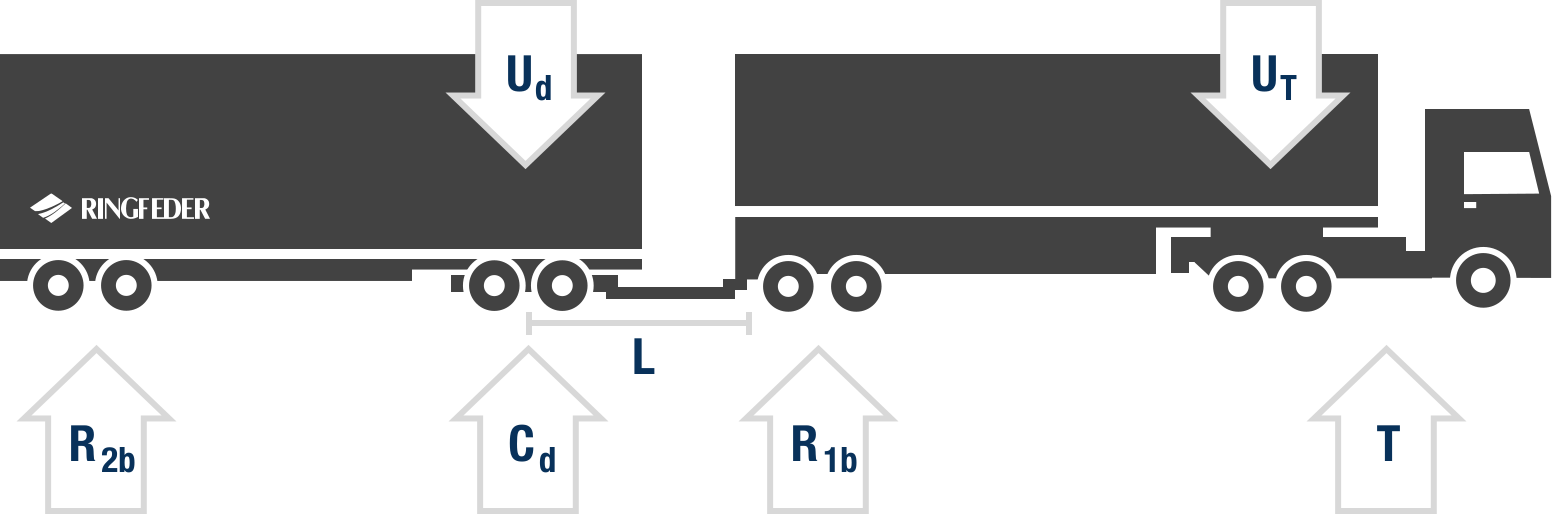


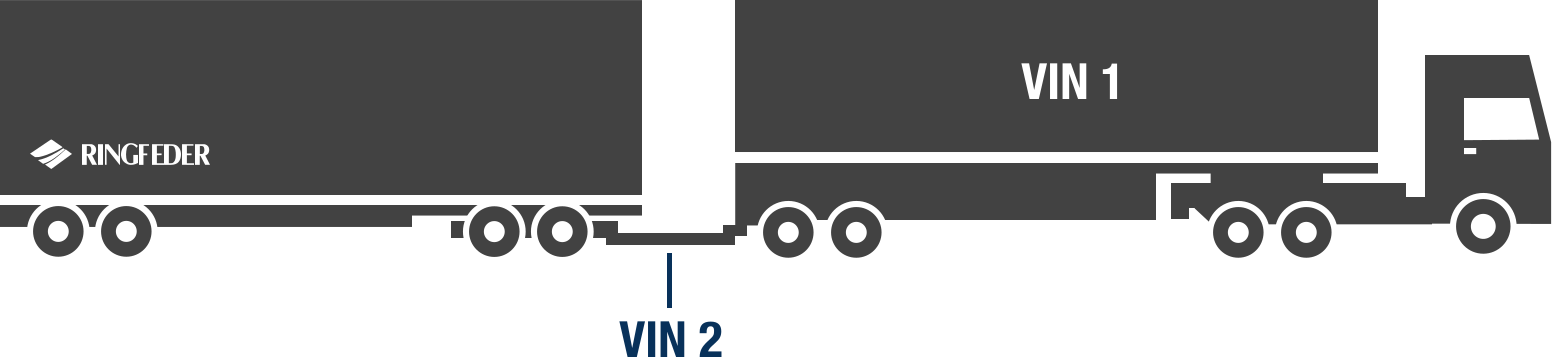
The Dc value is a reference value for the horizontal force between truck and trailer with a rigid drawbar. Here you also need to take into account the vertical forces. The V value is a reference value for the vertical force. This value differs between vehicles with air suspension and those with other types of suspension.
The coupling equipment you choose must have at least as high Dc and V values as the calculated vehicle combination.
For a dolly with rigid drawbar, the Dc and V values for the chosen coupling equipment must exceed the calculated values. For a dolly with hinged drawbar, the D value for the coupling equipment must exceed the calculated Dc value for the dolly.
In order to evaluate your combination, you need to enter both the vehicle values and the certified performance values for each component of the coupling equipment.
You can find the certified performance values for the components of the coupling equipment either on the type plate affixed to the component or in the documentation for the component.
The calculation is based on a S-Value of 1000 kg.
Truck + centre axle trailer with rigid drawbar + centre axle trailer with rigid drawbar
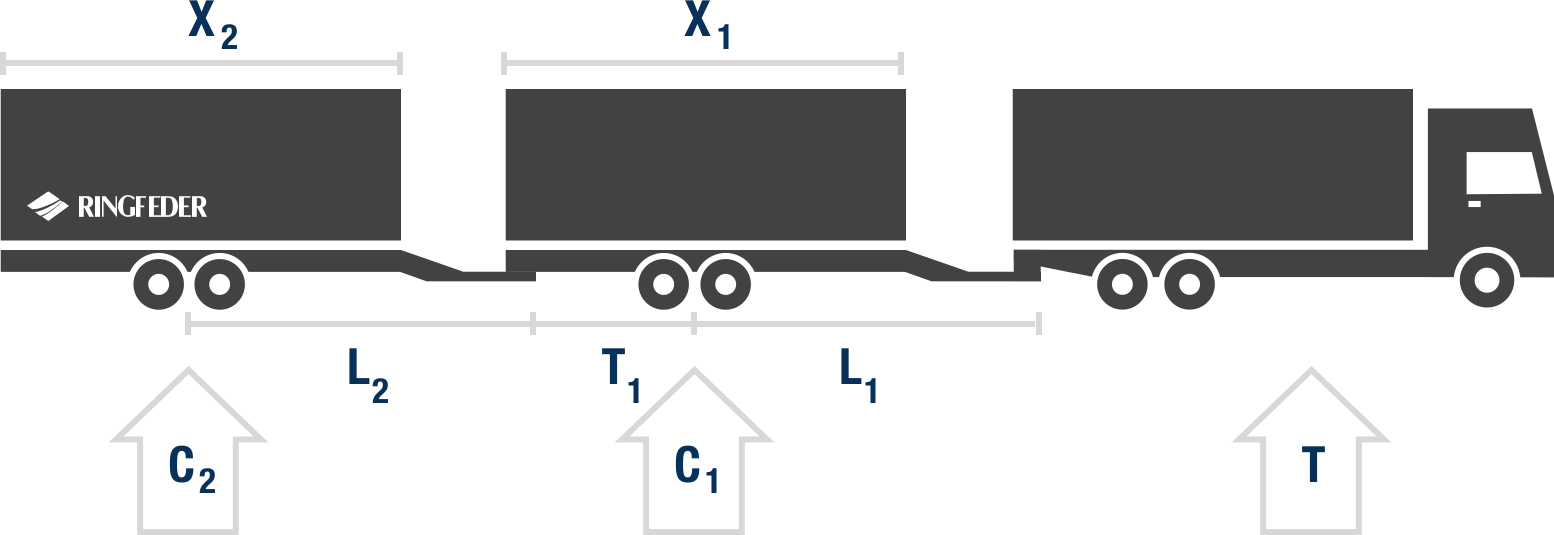



The Dc value is a reference value for the horizontal force between truck and trailer with a rigid drawbar. Here you also need to take into account the vertical forces. The V value is a reference value for the vertical force. This value differs between vehicles with air suspension and those with other types of suspension.
The coupling equipment you choose must have at least as high Dc and V values as the calculated vehicle combination.
In order to evaluate your combination, you need to enter both the vehicle values and the certified performance values for each component of the coupling equipment.
You can find the certified performance values for the components of the coupling equipment either on the type plate affixed to the component or in the documentation for the component.
The calculation is based on a S-Value of 1000 kg.
Tractor unit + link trailer + semitrailer (B-train)
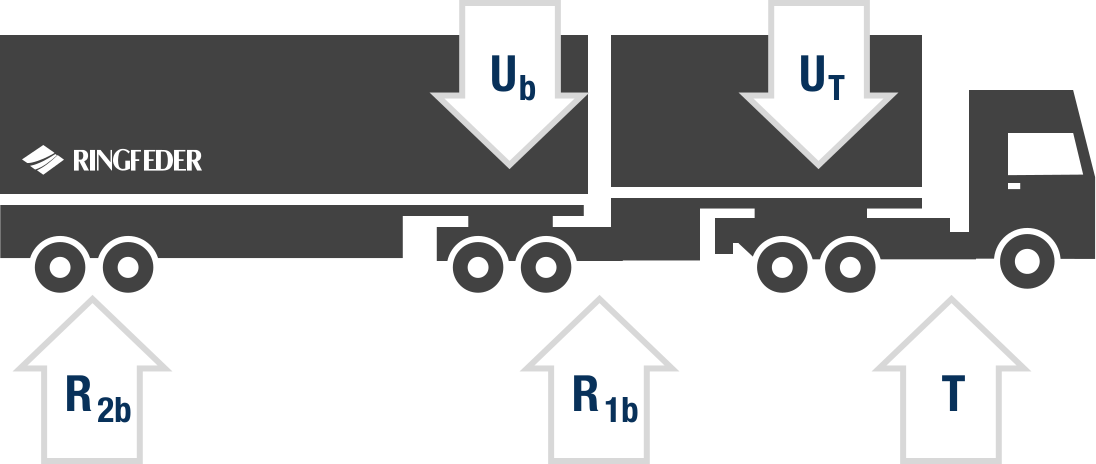
The D value is a reference value for the horizontal force between tractor unit and semitrailers.
For this combination, you must consider the maximum kingpin pressure, which may be limited by the total mass of the tractor unit, the max. kingpin pressure on the semitrailer and the max. kingpin pressure on the fixed or adjustable fifth wheel.
The coupling equipment you choose must have at least as high D and U values as the calculated vehicle combination.
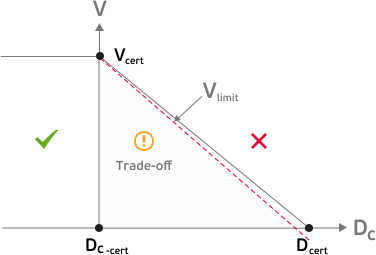
A component which is only subjected to a horizontal force has a certified performance value for this (Dcert). If the same component is also subjected to vertical forces (rigid drawbar), its performance in the horizontal axis will be reduced. The component will have certified performance values for this situation too (Vcert and Dc-cert).
The performance difference between Dcert and Dc-cert is the ‘trade-off’. This means that a lower V value than the certified value may be permitted, so the component can be used without any risk provided that the calculated V value does not exceed Vlimit.
To drive with this combination, you need a certificate to show that a trade-off is possible and that the coupling equipment provides adequate performance.
The details will be reviewed manually, so you must allow for a certain delivery time before you receive the certificate.